Core ADAS Systems (ACC, LKA, AEB, BSD, ISA)
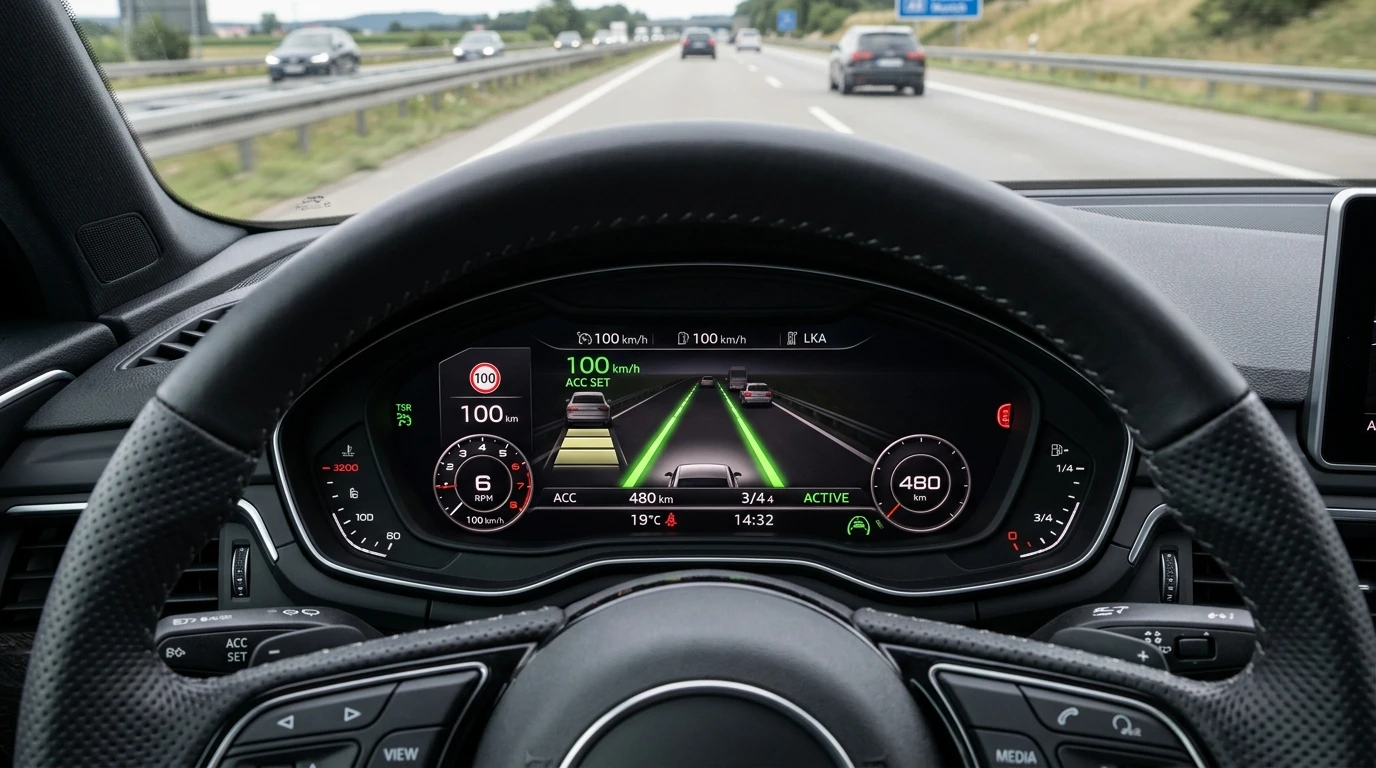
Core ADAS Features in Modern Vehicles
Under the EU General Safety Regulation, newly registered passenger cars are equipped with mandatory driver assistance technologies:
- Adaptive Cruise Control (ACC):
- Uses radar in the front grille and windscreen cameras to track vehicles ahead.
- Maintains cruising speed and automatically slows down to preserve safe following distance.
- Limitation: Can misread parked cars in tight bends or react late to cutting-in motorcycles.
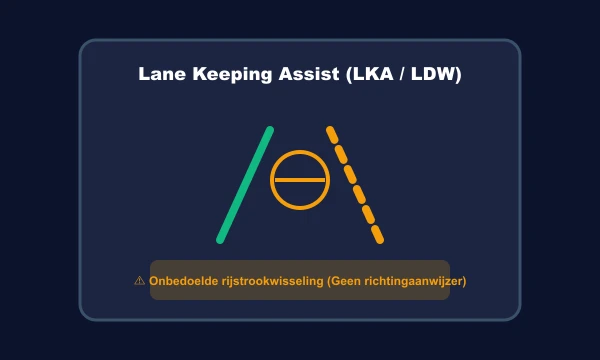
- Lane Keeping Assist (LKA) / Lane Departure Warning (LDW):
- Detects white/yellow road surface markings.
- Nudges the steering wheel back toward center if the car drifts without turn indicator activated.
- Autonomous Emergency Braking (AEB):
- Pre-charges brakes and automatically initiates emergency stop if an imminent collision with a car, pedestrian, or cyclist is detected.
- Blind Spot Detection (BSD):
- Radar in rear bumper detects vehicles in adjacent blind zones; illuminates an amber/red icon in the exterior mirror.
- Intelligent Speed Assistance (ISA):
- Reads speed signs via optical cameras and GPS data, alerting the driver when the speed limit is exceeded.
Essential Statutory Rules (RVV 1990)
- Adaptive Cruise Control (ACC): radar/cameras maintain pre-set speed and safe following gap behind vehicles ahead.
- Lane Keeping Assist (LKA): warns or nudges steering if car drifts over lane markings without signaling.
- Autonomous Emergency Braking (AEB): applies brakes automatically to prevent or mitigate forward crashes.
- Blind Spot Detection (BSD): illuminates warning light in side mirror; does not replace manual shoulder checks.
ADAS systems are driver aids, NEVER substitutes! Blind Spot Detection does not replace looking over your shoulder.
Check Your Understanding (4Questions)
Immediate CBR validation with instant answers and statutory RVV 1990 legal context. Scores persist in your module dashboard.
What is the statutory minimum tire tread depth for passenger cars in the Netherlands? Enter the number in millimetres.
You are driving on a motorway with Adaptive Cruise Control (ACC) engaged. The car ahead brakes suddenly, but your ACC fails to brake in time, causing a rear-end collision. Who is legally responsible?
Under which weather condition is the front radar sensor of an Adaptive Cruise Control (ACC) system most likely to fail or deactivate unexpectedly?

Your passenger car is equipped with Blind Spot Information System (BLIS / BSD) warning LEDs in the side mirrors. Does this system eliminate the need to perform a direct over-the-shoulder blind spot check?