Cockpit Scanning Routine & Mirror Checks
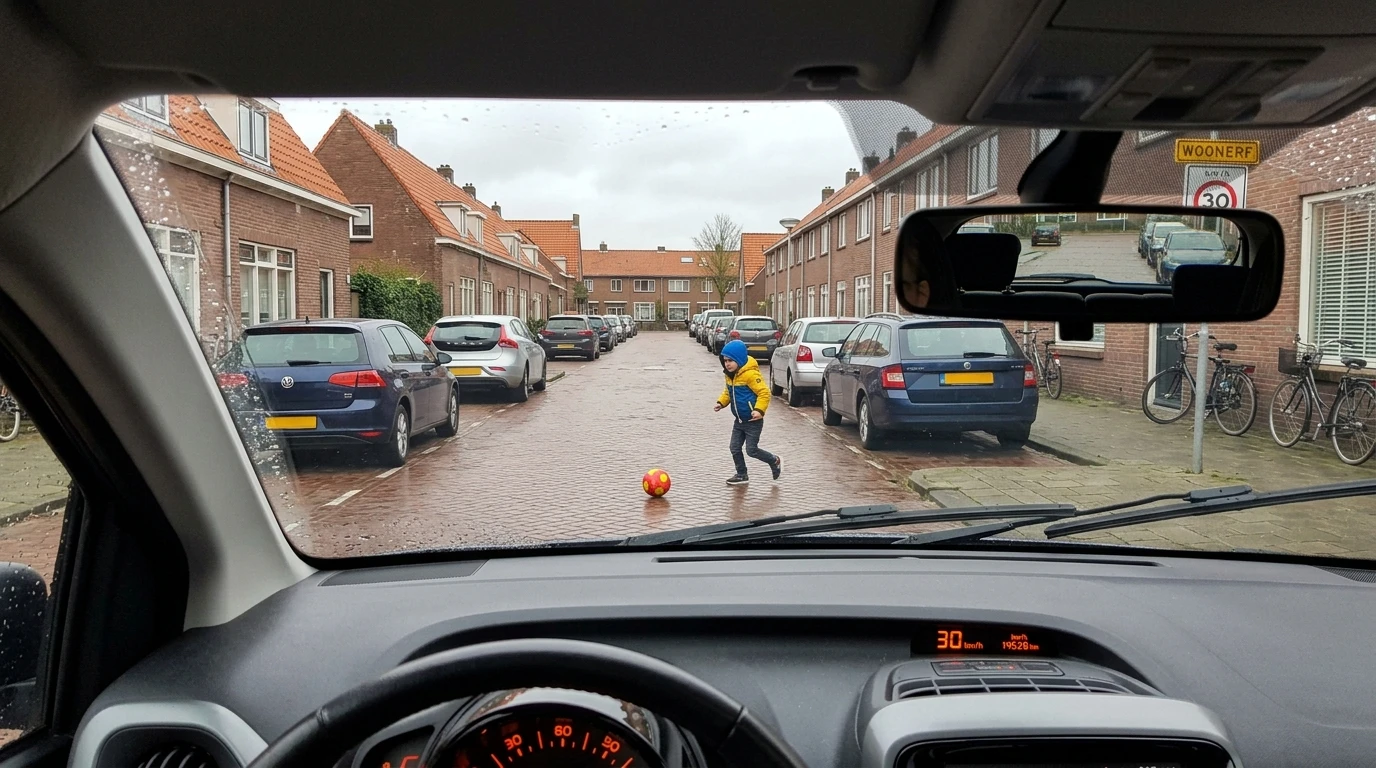
The Systematic Cockpit Scan Path
In the CBR examination, each scenario displays a cockpit dashboard bar showing your Speedometer and your Rearview Mirror. Follow this sequence:
[1. Speedometer] ──> [2. Forward Road View] ──> [3. Rearview Mirror] ──> [4. Side View]- Check the Speedometer:
- Is your current speed appropriate for the road type?
- If you are traveling at 60 km/h in a 50 km/h zone or 45 km/h in a 30 km/h zone, immediate braking is required.
- Scan the Forward Road:
- Look far ahead (200 meters) to anticipate red lights, bottlenecks, and cyclists.
- Look between parked cars for pedestrians, open car doors, or pets.
- Consult the Rearview Mirror:
- Is another vehicle tailgating (bumperkleven) right behind you?
- If a tailgater is present and the hazard ahead is only potential (e.g. wet road), release accelerator rather than braking to prevent a rear-end impact.
Essential Statutory Rules (RVV 1990)
- Systematic scan routine: Speedometer -> Ahead scene -> Rearview mirror -> Side mirrors.
- A close tailgater in the rearview mirror forces releasing the accelerator rather than harsh braking unless an acute crash looms.
- Blind spot checks (over the shoulder) are mandatory before changing lanes, turning, or pulling out.
- Adjust mirrors so that only a tiny sliver of your car's rear flank is visible.
In hazard questions, always check the speedometer first! If you are driving 50 km/h in a 30 km/h zone, you must brake immediately.
Check Your Understanding (4Questions)
Immediate CBR validation with instant answers and statutory RVV 1990 legal context. Scores persist in your module dashboard.
What do you do? (Speed: 30 km/h, residential street, an elderly cyclist 40 meters ahead wobbles while glancing back over their shoulder).
What do you do? (Speed: 70 km/h, rural road, heavy fog with visibility reduced to 40 meters, roadside sign indicates a sharp bend in 50 meters).
What do you do? (Speed: 50 km/h, city ring road, pedestrian with a dog on a leash walking on a wide raised sidewalk protected by metal guardrails).
What do you do? (Speed: 80 km/h, two-lane road, approaching a bridge over open water, warning sign for severe crosswinds, tree branches swaying violently).