Prohibition & Mandatory Signs (Series C & D)
Exam Trap: Sign C3 vs. Sign D4
| Sign | Shape | Name | Can oncoming traffic appear? |
|---|---|---|---|
| Sign C3 | Blue Square | One-way street (Eenrichtingsweg) | NO. All vehicles travel in one direction. |
| Sign D4 | Blue Circle | Mandatory direction straight ahead (Gebodsbord) | YES. You must drive straight, but oncoming traffic can meet you. |
Narrow Passages: Sign F5 vs. Sign F6
- Sign F5 (Blue Square with white upward arrow and red downward arrow): You have priority over oncoming traffic in the narrow section.
- Sign F6 (White circle with red border, red upward arrow and black downward arrow): You must give way to oncoming traffic.
Essential Statutory Rules (RVV 1990)
- Sign C3 (Blue square): One-way street. Oncoming traffic is prohibited.
- Sign D4 (Blue circle): Mandatory direction straight. It is NOT a one-way street; oncoming vehicles are permitted.
- Sign F5 (Blue square): You have priority in narrow passages (white arrow in your direction).
- Sign F6 (Red circle): You must yield to oncoming traffic (red arrow in your direction).
Circle with white arrow means mandatory direction (gebod), not one-way street! Oncoming traffic is permitted on D4 roads.
Check Your Understanding (4Questions)
Immediate CBR validation with instant answers and statutory RVV 1990 legal context. Scores persist in your module dashboard.
What speed must a motor vehicle be capable of exceeding to be legally permitted to enter a Dutch expressway (autoweg, sign G3)? Enter the number in km/h.
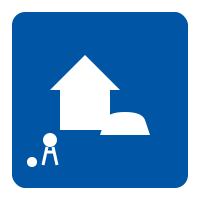
What is the statutory maximum speed limit for motor vehicles in a residential yard / living street (erf, sign G5)? Enter the number in km/h.
An overhead electronic matrix sign above your lane displays 70 km/h, while a round roadside sign A1 beside the motorway indicates 100 km/h. Which speed limit must you obey?
You are driving on a motorway and an illuminated red cross appears above your lane on an overhead matrix gantry. What does this indicate?