The 3 Actions Decision Matrix
The CBR Hazard Perception Decision Matrix
Candidates choose one of three actions:
- Brake (Remmen):
- When: Acute, immediate danger is present requiring emergency deceleration.
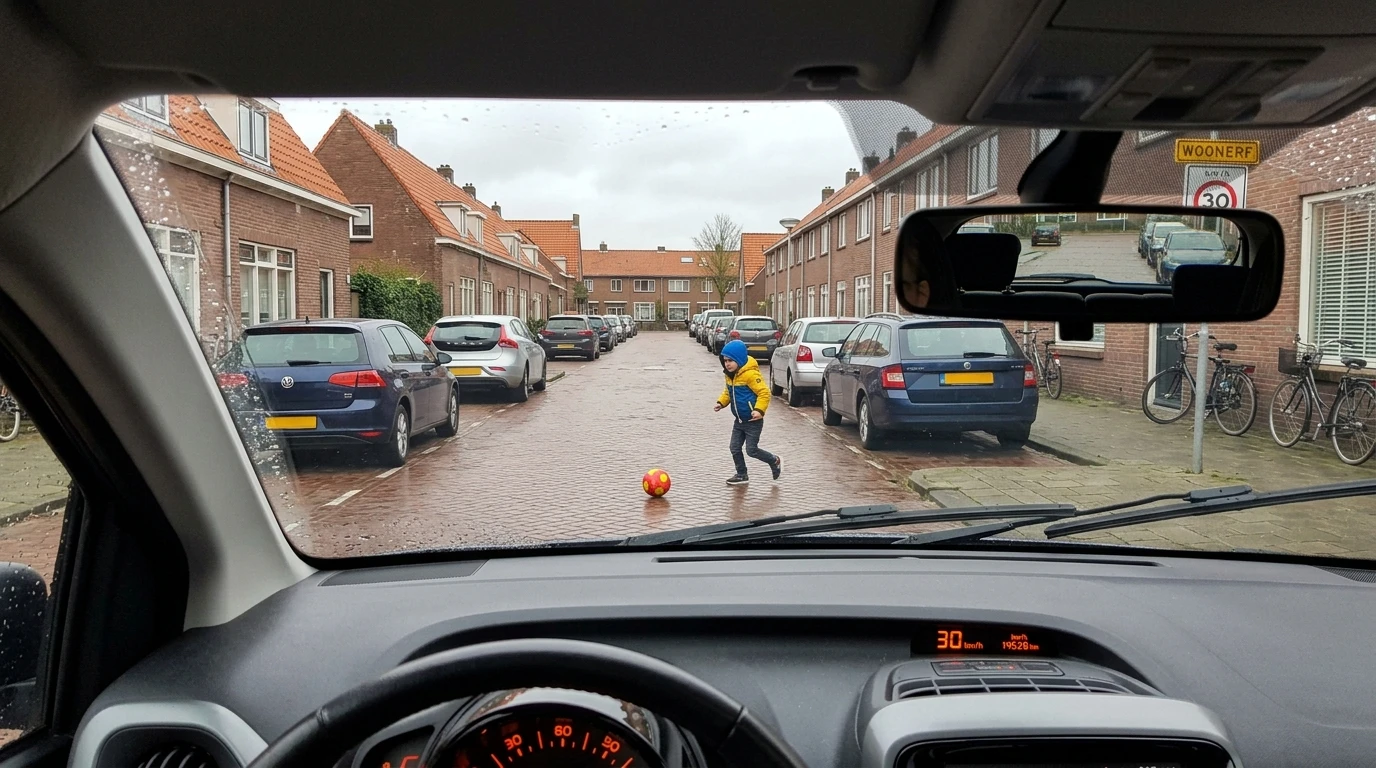
- Examples: A child or ball appears between parked cars; a car reverses out of a driveway into your lane; standing water creates immediate aquaplaning threat; crossing traffic violates your right of way with imminent crash risk.
- Release Accelerator (Gas loslaten):
- When: Latent, developing hazard where you prepare for possible braking.
- Examples: Approaching an obscured junction; a cyclist in the distance looking over their shoulder; warning signs for roadworks or cattle ahead; wet greasy asphalt starting to rain.
- Do Nothing (Niets doen):
- When: Clear road, good visibility, and current speed is already safe and low.
- Examples: You are driving 25 km/h in a wide 30 zone with no pedestrians; a pedestrian is walking safely behind a fence on a sidewalk; tailgater behind you and no acute danger ahead.
Essential Statutory Rules (RVV 1990)
- Brake (Remmen): Imminent acute danger requiring severe reduction in speed (pedestrian stepping into roadway, ball rolling between cars).
- Release Gas (Gas loslaten): Potential hazard developing ahead (obscured junction, swaying cyclist in distance).
- Do Nothing (Niets doen): Safe, clear conditions where speed is already appropriate.
Always check speedometer and rearview mirror shown in the scenario bottom bar! If a tailgater is right behind, avoid braking unless collision is imminent.
Check Your Understanding (4Questions)
Immediate CBR validation with instant answers and statutory RVV 1990 legal context. Scores persist in your module dashboard.
What do you do? (Speed: 50 km/h, built-up area, dry road, car closely following behind, a child chases a red ball between parked cars 20 meters ahead).
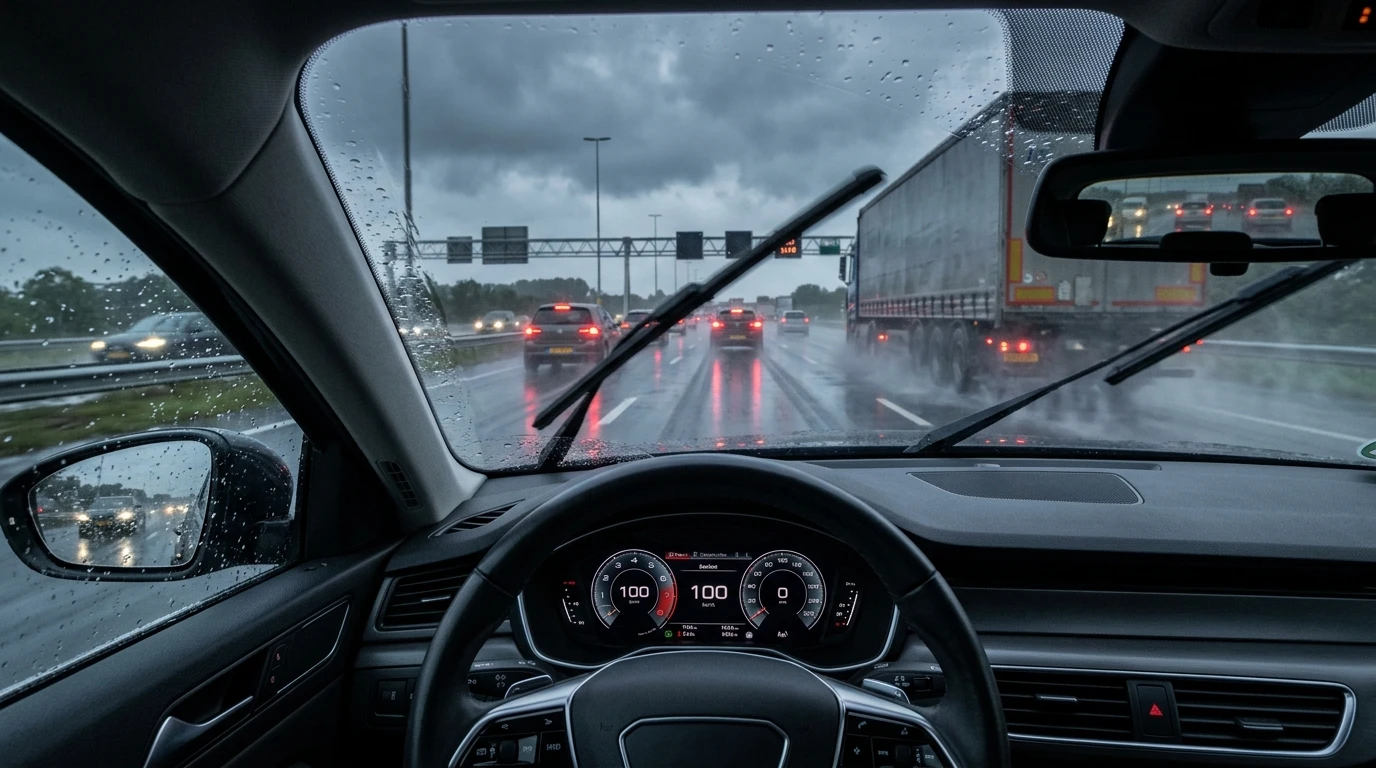
What do you do? (Speed: 100 km/h, motorway, dry conditions, clear road behind, traffic 150 meters ahead shows brake lights in the distance).
What do you do? (Speed: 80 km/h, provincial road, light rain, a roadworks warning sign J16 ahead, oncoming lane is empty).
What do you do? (Speed: 100 km/h, motorway, clear daylight, smooth traffic flow, car ahead is 70 meters away at matching speed, no obstacles or brake lights).