Weather Hazards, Aquaplaning & Surface Grip
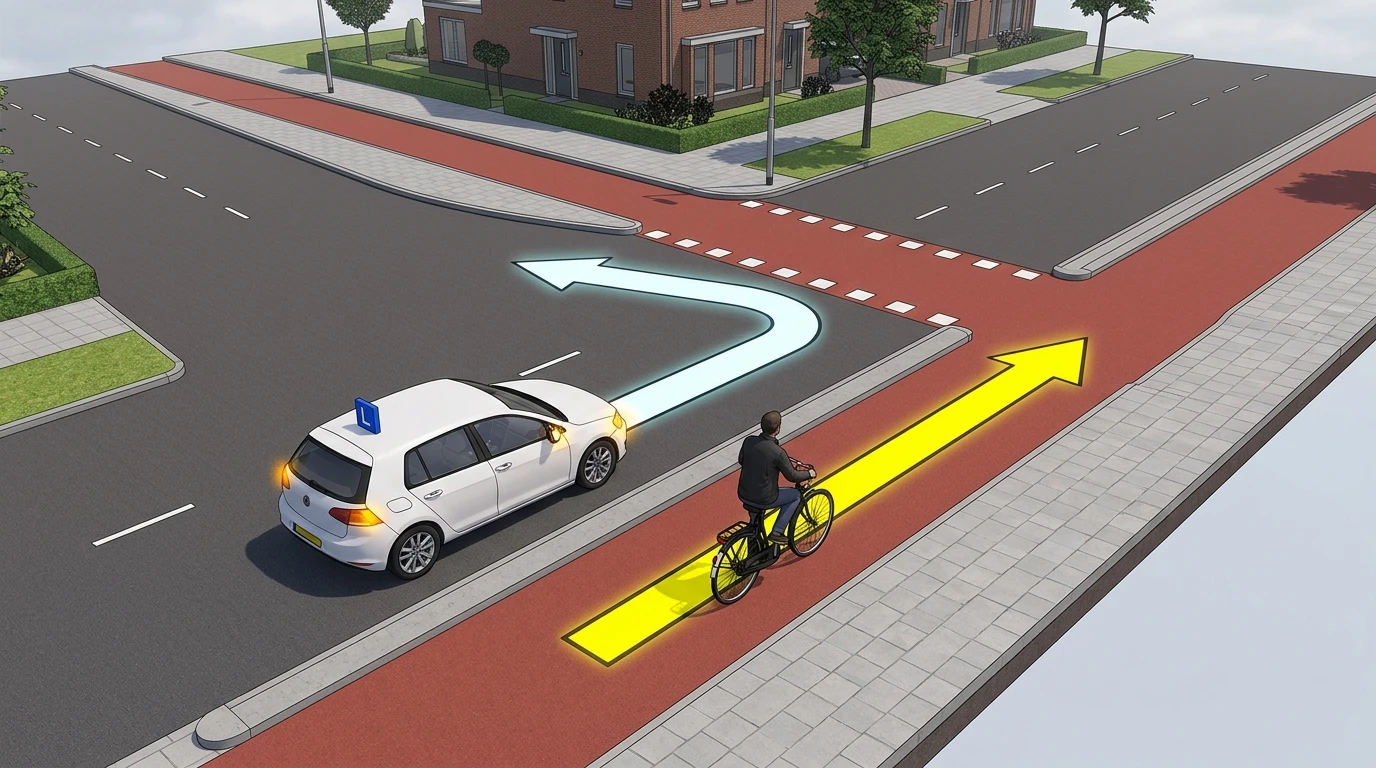
Weather Hazards and Stopping Distances
Adverse weather alters tyre friction dramatically:
- Dry Asphalt: High grip; 100% baseline braking efficiency.
- Wet Asphalt: Braking distance increases by 1.5x.
- Snow: Braking distance increases by 2x to 4x.
- Black Ice (IJzel): Braking distance can increase up to 8x!
Aquaplaning (Watergladheid)
- What is it? A layer of water builds up between the tyres and road surface, causing the vehicle to float, resulting in complete loss of steering and braking control.
- Causes: High driving speed (>80 km/h), standing water (such as in motorway ruts / spoorvorming), worn tyre tread (<3 mm), and incorrect tyre pressure.
- What to do:
- Do NOT brake sharply.
- Do NOT make abrupt steering maneuvers.
- Release the accelerator pedal smoothly and depress the clutch (or keep neutral in an EV) until you feel the tyres cut through the water and regain grip.
Essential Statutory Rules (RVV 1990)
- Wet asphalt increases braking distances by approximately 50%; snow and ice increase braking distances by up to 400%.
- Aquaplaning occurs when water builds up faster between tyre tread grooves than it can be dispersed.
- Rutting (spoorvorming) on motorways fills with standing water; stay outside the ruts.
- Black ice (ijzel) is invisible; bridges and viaducts freeze first due to cold wind blowing underneath.
During aquaplaning: DO NOT brake hard or yank the steering wheel! Release the accelerator and depress the clutch to allow tyres to regain road contact.
Check Your Understanding (4Questions)
Immediate CBR validation with instant answers and statutory RVV 1990 legal context. Scores persist in your module dashboard.
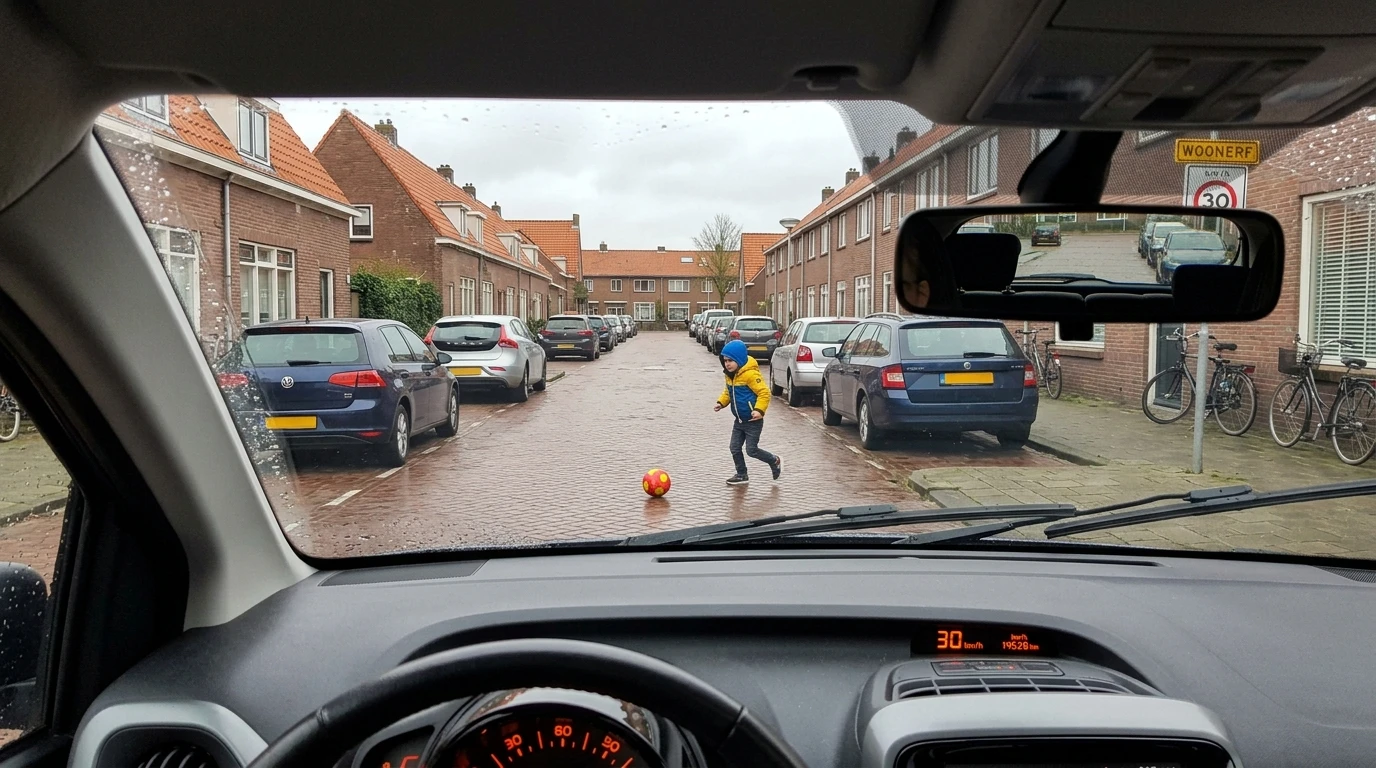
What do you do? (Speed: 30 km/h, narrow shopping street, a parked delivery van 15 meters ahead swings its driver-side door wide open into your driving lane).
What do you do? (Speed: 50 km/h, urban boulevard, green traffic light ahead, clear road behind, a pigeon pecks on the sidewalk 25 meters ahead).
What do you do? (Speed: 80 km/h, rural tree-lined road, torrential downpour creating deep standing water pools across both wheel tracks 35 meters ahead).
What do you do? (Speed: 50 km/h, wet asphalt, 60 meters ahead an oncoming garbage truck is stopped partially across the center line, an oncoming passenger car waits behind it).